Common Name: Eastern Cottonwood
Scientific Name: Populus deltoides
Location: Red Barn Park
Identifying Features
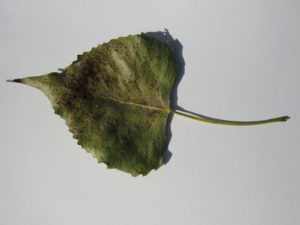
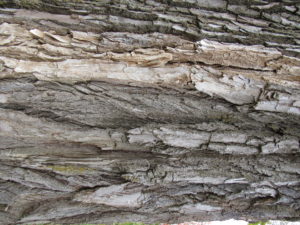
Cottonwoods are an important component of stream-side communities throughout Missouri and several large trees line Bear Creek here in Red Barn Park. The leaves are broadly triangular with pointed tips and toothed edges. Because of their flattened leaf stalks, leaves tend to flutter in even the slightest breeze. Male and female flowers are borne on separate trees in elongate spikes called catkins. In May, the tiny fruit capsules release their hairy seeds which then ‘snow’ down on lawns, sidewalks and roofs.
Distribution/Geography
Eastern Cottonwood is distributed across the East and Midwest.
Uses
According to pfaf.org, cottonwood leaves contain a greater amino acid content then corn, rice, wheat, and barley. However, the one problem with eating the leaves is they are very bitter. A number of mammals, including rabbits, deer, and domestic animals, browse the Eastern cottonwood seedlings and young trees. There is limited timber use in Eastern cottonwood. The wood is light, weak, and soft. Nevertheless, it is often used in manufacture of containers, furniture components, and high-grade pulp.
History
The eastern cottonwood is a member of the willow family (Salicaceae). Fast-growing yet relatively short-lived, cottonwoods are easily distinguished by their triangular- (or deltoid-) shaped leaves that easily flutter in the wind.
Fun Fact
Beavers are known to use cottonwood poles to build their dams.