Common Name: Pin Oak
Scientific Name: Quercus palustris
Location: Quadrangle
Identifying Features
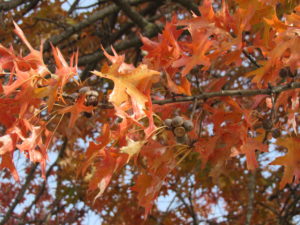
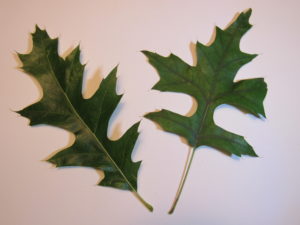
Its distinctive pyramid shape, with upper branches angling upwards, middle branches outwards, and lower branches downwards make it easy to identify. Pin Oak leaves are alternate, simple, deeply cut with the lobes perpendicular to the main axis. They appear a glossy dark green in summer turning rustic red to brown in autumn. The tiny acorns are rounded and dark with conspicuous light stripes. Pin Oaks flower from April-May with yellow-green catkins and produce acorns from September-October of the second year. Bark can appear knotty due to abundance of small limbs.
Distribution/Geography
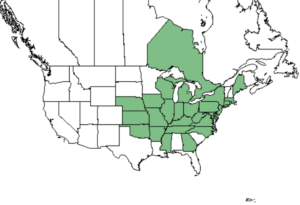
Pin Oaks are commonly native to Central and Eastern United States. Often found in bottom-land forest areas. The Pin Oak can reach up to 100 feet tall. The Pin Oak is the most common tree on campus.
Uses
Acorns provide food for ducks, turkey, squirrels, and deer. The bark can be used to make a tea for mouth sores, coughs, and chapped skin. The wood is often used for fuel and construction.
History
The Pin Oak was first cultivated in 1770. Its species name palustris means “of low grounds”. It is often used as a landscaping tree but is prone to chlorosis in alkaline soils.
Fun Fact
The pin oak’s bark was once in high demand among a number of Native American tribes, who would extract the liquid (via distillation or immersion in boiling water) and use it to produce a beverage that was thought to be an effective cure for intestinal discomfort.