Common Name: Kentucky Coffee Tree
Scientific Name: Gymnocladus dioica
Location: Kirk Memorial
Identifying Features
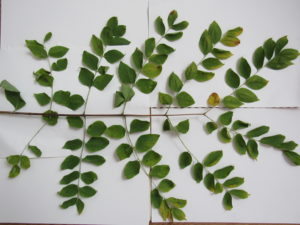
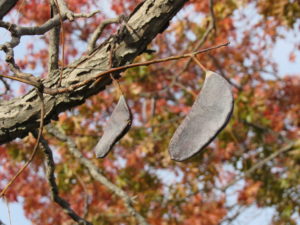
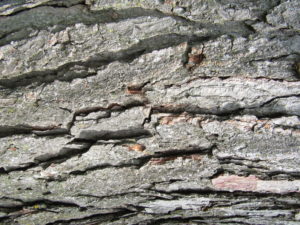
Kentucky Coffee Tree has the largest leaves of all trees on campus and they are divided into numerous leaflets. Trees produce thick woody fruit pods and these often remain on the tree in winter.
Distribution/Geography
In its natural habitat, the Kentucky coffee tree is rare. It can only be found in temperate forests in small colonies. From New York and Pennsylvania west to Minnesota, south to Oklahoma, and east to Kentucky and Tennessee, the natural range stretches. Naturalized in Alabama, West Virginia, Virginia, and Delaware, the species can also be found in the Dakotas, Texas, Georgia, and the Carolinas. Native Americans are believed to have spread it to some regions.
Uses
– Edible parts: Seedpods can be eaten raw or fried. The roasted seeds are similar to sweet chestnuts and can be consumed as such. The pulp has a nice flavor. A caramel-like flavor. The pods can reach a length of 25cm and a width of 5cm. The roasted seed can be used as a caffeine-free coffee alternative. It has a sour taste. To destroy the toxic hydrocyanic acid present in the seed, it must be thoroughly roasted for at least 3 hours at 150 C. Roasted seed are eaten like a nut.
– Other uses: Saponins are abundant in the fruit, which is why it is used as a soap. Fly poison is made from the leaves. To stabilize and recover the soil, trees are planted on mine spoil tops. Wood is coarse-grained, thick but not stiff, solid, and long-lasting when in contact with the soil, and finishes to a fine lustre. It’s a beautiful wood that weights 43 pounds per cubic foot and is used for cabinetry, furniture, architecture, and fencing, among other things.
History
The early Kentucky settlers named this tree after the similarity of its seeds to coffee beans. Its timber was formerly used in the design of railway sleeper cars.
Fun Fact
Hydrocyanic acid is present in the ripe seed. This toxin can be eliminated by heating the seed to 150°C for at least 3 hours. Saponins are contained in the seed. Despite their toxicity, these compounds are poorly absorbed by the body and therefore appear to pass by unharmed. Heat even breaks them down, so a long, slow bake will ruin them. Saponin-containing foods can not be consumed in significant amounts. Saponins are much more poisonous to certain animals, such as fish, and hunting tribes have historically used vast amounts of them to stun or kill fish in streams, lakes, and other bodies of water.