Common Name: Black Gum
Scientific Name: Nyssa sylvatica
Location: Sunken Garden
Identifying Features
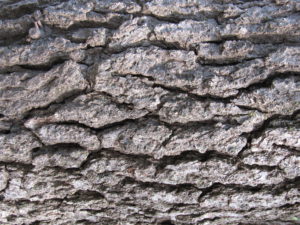
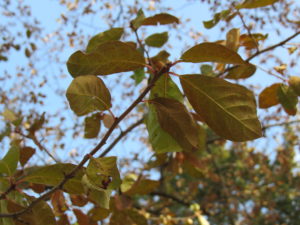
Two Black Gum trees are growing on either side of the steps descending into the Sunken Garden. Found in southeast Missouri, this tree is one of the first to turn color (scarlet-purple) in the fall.
Needs Distribution/Geography
Black Gum is found from southern Maine southwest to southern Missouri, south to eastern Texas, along the Gulf Coast to central Florida and north along the coastal plain.
Click here to see a map of where the Black Gum can be found.

Uses
Black gum is commonly used for concealed parts in furniture, veneer for containers, plywood, pulp, railroad ties, and lumber for boxes, crates, and pallets. When compared with the other tupelo species, the black gum trees are highly favored by honey producers for creating a light and mild-tasting honey.
History
The tree was used traditionally by Native Americans as a teeth-cleaning twig. It also was used for dipping snuff.
Fun Fact
On Martha’s Vineyard, in Massachusetts, this species is called “beetlebung”, perhaps for its use in making the mallet known as a beetle, used for hammering bungs (stoppers) into barrels