Common Name: Bur Oak
Scientific Name: Quercus macrocarpa
Location: Quadrangle
Identifying Features
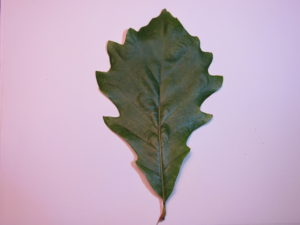
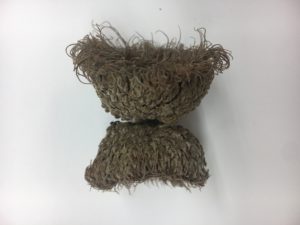
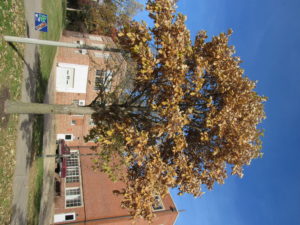
Mature trees can reach heights of 70-80 ft. Bur Oak leaves are large and have a distinctive shape: the upper half is fan-shaped with shallow lobes and the lower half is lobed but with an unusually deep notch on each side. These dark green leaves turn yellow in Autumn. The acorns are large and are covered by a cap with conspicuous bristles along the margin. These acorns usually ripen from September to October. This tree has deeply grooved gray bark. Year old twigs can produce corky winged-ridges.
Distribution/Geography
Bur Oaks grow in North-Central United States and Great Plains. They are found in prairie valleys, low woodlands or upland woods in the North. This tree has the potential to live from 300-600 years.
Uses
The wood of Bur Oaks are considered heavy hardwood. This tree is used for making barrels, hardwood flooring, and lumber. The acorns provide food and shelter for wildlife.
History
This tree has been in cultivation since 1811. It often proves very tolerant of city pollutants.
Tree Fact
Oak is the national tree of USA.