Common Name: Red Oak
Scientific Name: Quercus rubra
Location: Baldwin Hall
Identifying Features
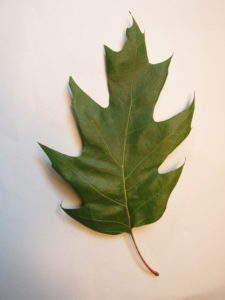
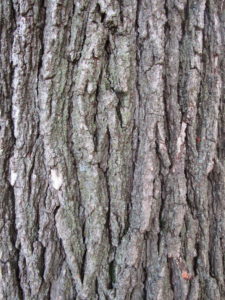
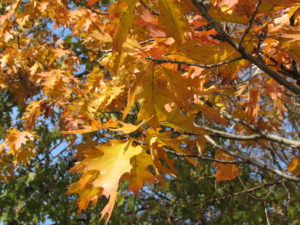
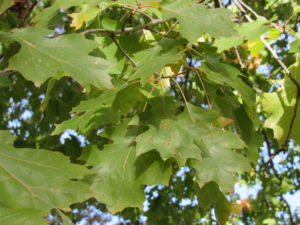
The crown (foliage) of the tree grows in round shape. Red oaks have alternate, simple leaves with 7-11 bristle-tipped lobes angled towards the tip. These leaf lobes are broader than a Pin Oak. In summer, the leaves are dark green with a pale green underside. In autumn they turn a deep russet-red to bright red, or sometimes orange. This tree produces male catkins (hanging flowers) separate from female flowers found in the axils of new foliage April through May. Ripening the second year, large oblong acorns reaching 1” in length are covered by a smooth, shallow, saucer-like cap. The bark has flat topped ridges with shallow furrows and turns a darker gray with age.
Distribution/Geography
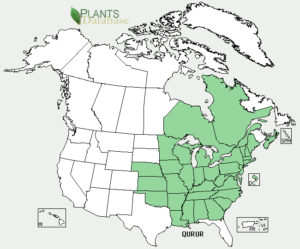
The Red Oak is native to the Midwest and distributed through North,South Central, and Eastern United States. This tree can grow rapidly to the extent of two feet per year reaching a mature height between 60-75 feet. These trees prefer well-drained soils of sand or loam but tolerate our Missouri clay soils.
Uses
Used as a street or yard tree because it handles pollution well and has a bright fall color. Used for hard-wood lumber in furniture or posts. Provides nesting sites and food for wildlife.
History
Native Americans would boil or soak acorns to use them as a source of food or medicine for infections and diseases. Oaks are a common symbol of strength and endurance throughout history.
Tree Fact
The Red Oak acorns you find on the ground took two years to mature and have dropped on the second year. These acorns have more tannin in them which make them more bitter to eat (even for the squirrels!).